
Cambridge Analytica misuses Facebook information

_8

An emerging story that’s happening right now is the Cambridge Analytica’s misappropriation of Facebook user’s information. The Rolling Stone gives a recap on what we know so far in this story. So far, during the time of Donald Trump’s presidential campaign, his election team hired Cambridge Analytica and gathered 50 million Facebook profiles.

The reason that has been said for the gathering of these profiles was to use the information to identify U.S voters to target them with personalized political advertisements.

Back in early 2017, Cambridge head of products, Matt Oczkowski, said in a postelection Google panel that the Trump campaign didn’t use psychographics.

This isn’t the first time that this has happened. Back in 2015, presidential candidate Ted Cruz did the exact same method. Cruz’s campaign paid researchers at Cambridge University to gather Facebook profiles.
The Drive on the 2019 Detroit Auto Show

auto

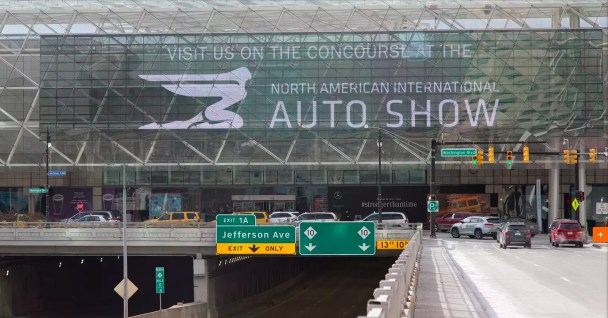
An article that I found that uses curation is from The Drive, a news website about automobiles, that talked about the Detroit Auto Show moving the dates for the 2019 Detroit Auto Show to October instead of January.

The article does an alright job curating, adding a few links that backed up his statements. For example, he linked the article that shows that Mercedes-Benz will sit out of the 2019 Detroit Auto Show.

His article is well written, but he weaved in his own opinions, saying that the 2018 Detroit Auto Show was the “most boing and irrelevant Auto Show in his career.” Towards the end of the article, he states that The Drive is for the October move date for the Detroit Auto Show.

There’s also times in the article that needed to be linked. He stated where he got his information and talks about it, like Automotive News, but doesn’t link the original article. I also thought that he needed to add other outside sources, other than articles from his own publication.

Curated story on Betsy DeVos

bt 4

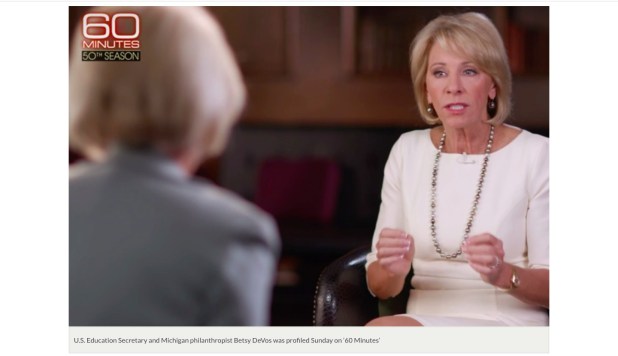
When reading Ron French’s curated story about Betsy DeVos, he presented facts that backed up what he was saying. For example, when answering how Michigan schools are really doing, he linked an article to the following statement, Michigan is “dead last among states in improvement in math and reading.” When looking on the article, we can see that Michigan, as well as West Virginia, South Carolina, and Alaska are struggling with maintaining the average growth.

French contextually linked articles and websites throughout his story. When reading, I didn’t know what the National Assessment of Education Progress (NAEP) was, until he linked the website. It is a detailed data base of national and state assessments.

I liked that his story can be easily readable. It wasn’t overly complicated with statistics or bunched up with his own opinions. He presented the story as it is, with facts that backed up his word.

Verifying images before using them

Screen Shot 2018-03-14 at 4

Being able to verify an image is crucial in journalism. If an image isn’t verified, it could create misunderstanding between what’s written and the image. On the Verification Handbook, there are ways to prevent these misunderstandings. They are:

  1. Establish the author/originator
  2. Corroborate the location, date, and time
  3. Confirm the image is what it is labeled
  4. Obtain permission from the author/originator to use the image

Being able to know exactly who posted the image first will verify if the image is exactly what is meant to be. Also, when you confirm that the image is what it is, you can double check by using Google Map or Bing Maps to make sure that’s the exact location. Another tool could be checking weather of when the image was taken. Geofeedia is another tool that can be used to check social media post with geographic location. If the image that you want can’t be used, you can ask the author/originator for their permission.

With these ways, we can make sure to double check the images before using them. It is simple to take an image off Google and use it for something else.

FOIA, e-cycling in Michigan

muckrock

When looking on Muck Rock, I found a request that was submitted and is completed. The request is asking for documents from 2013, 2014, 2015, and 2016 from electronic manufacturers to see if they are following the obligations of e-cycling, in Michigan. Some manufacturers include Dell, Samsung, LG, Sony, and Microsoft.

The Michigan Department of Environmental Quality (DEQ) responded and forwarded the request to the Waste Management and Radiological Protection Division of DEQ. A fee of $99.75 needed to be paid to satisfy the request.

After the FOIA request was satisfied, DEQ sent in six separate emails containing the documents that were requested. There were some manufacturers that didn’t have the documents because they weren’t registered.

This non-profit news site makes requesting government documents easy, if needed.